
Infection Control Throughout The Years

From ‘Bad Air’ to Bedpan Washers: The Epic Journey of Infection Control!

Ever wondered how we got from fearing ‘bad air’ to using super-high-tech bedpan washers to keep hospitals and care homes safe? The history of infection control represents a compelling and crucial narrative of advancement in healthcare evolution:


The Early Days: Containment, Isolation, and “Bad Air” 💨

Imagine a world where nobody knew about germs! Back in the 16th Century, the closest thing to infection control was called a ‘cordon sanitaire’, which was a physical barrier during plague outbreaks to stop people from moving in or out of infected areas. Simple, but effective for its time!

In the 17th Century…things got a bit smelly. People believed in the “miasma” theory, convinced that foul smells from sewers and waste caused disease. They focused on air quality, missing the actual, microscopic culprits.

Then, in 1676, a real breakthrough! A Dutch businessman named Antonie Philips van Leeuwenhoek, using a microscope he built himself, became the first to spot tiny life forms, which he called “little animalcules.” The first sighting of bacteria! It would take a while, but the microscopic stage was set.

The history of the bedpan is intrinsically linked to the growing need for sanitation and patient comfort. In the early days, Bedpans were simple, often bowl-shaped, and considered household staples, essentially chamber pots adapted for bedside use. They were made from various materials like pottery or metal.


The 19th-Century Revolution: Soap, Sanitation, and the Birth of Germ Theory! ✨

The 19th Century was the true game-changer:
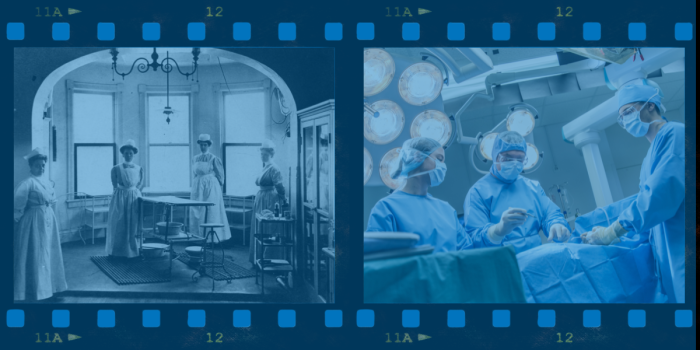
  • Early 19th Century: A New York pewterer named Frederick Bassett designed a bedpan specifically for the immobile, which could even be gently heated and slipped under the covers.
  • 1847: The Power of Handwashing! The amazing Ignaz Semmelweis noticed that doctors were carrying disease between autopsies and childbirth. His brilliant, simple solution? Wash your hands! He drastically lowered death rates and cemented hand hygiene as a medical essential.
  • 1858: Florence Nightingale championed hospital reform and sanitation, including the use of bedpans, to reduce infection. Showing that cleanliness was key to reducing cross-contamination and plummeting death rates.
  • 1860s: Germ Theory Takes the Stage! Louis Pasteur proposed that microorganisms were the cause of many diseases. This idea was the foundation of modern medicine!
  • 1870: Antisepsis Arrives! Joseph Lister introduced the use of chemical agents (antisepsis) to kill germs during surgery. This was a critical turning point that led to safer operations and laid the foundation for modern infection control.
  • By the late 19th century, Robert Koch had provided conclusive proof that specific germs caused diseases like typhoid, validating germ theory and leading to dedicated infectious disease hospitals and the formal documentation of isolation and disinfection in nursing textbooks.


The 20th and 21st Centuries: Antibiotics, Protocols, and Tech! 🔬

The momentum was unstoppable:

  • 1928: The Miracle of Penicillin! Alexander Fleming discovered the first antibiotic, a drug that would become a medical powerhouse after mass production in 1945.
  • 1950s & 1970s: Hospitals get serious. Formal infection control programs were established and later became mandatory, creating dedicated roles for infection control professionals.
  • 1976: Bedpan materials evolved from ceramic and enamel to include plastics after the 1960s. The focus shifted to convenience and reducing contamination risk, with the first patent for disposable liners appearing in 1976.
  • 1980s: Disinfectants and alcohol-based hand sanitiser became widely available, making clean environments accessible everywhere!
  • Late 20th Century: Protocols got smarter. We stopped using a one-size-fits-all approach and created specific rules based on how an infection spreads: Standard, Contact, Droplet, and Airborne Precautions.

And now, in the 21st Century, technology is our new weapon! We’re fighting Healthcare-Associated Infections (HAIs) like MRSA with everything we’ve got.

  • UV Light Disinfection is emerging as a powerful tool; a 2019 study showed UV light could eliminate up to 97.7% of pathogens in an operating room!


Today: High-Tech Hygiene and Total Prevention! 🌟

Effective infection control today is a complete system focused on prevention:

  • Hand Hygiene: Still the absolute most important action! Wash, wash, wash!
  • Staff Education: All healthcare professionals must be expertly trained and up-to-date on protocols.
  • Surveillance & Monitoring: We continuously track infections to spot and stop outbreaks fast.

But let’s talk about one of the most essential modern heroes in the fight against infection: The Sluice Room and Bedpan Washers!


The Sluice Room Revolution!

Today, hospitals and care homes rely on a dedicated sluice room (or utility room) for managing human waste. It no longer has to be a messy, manual job!

  • Dedicated Space: Sluice rooms are designed with a strict flow: a “dirty side” for waste disposal and soiled items, and a “clean side” for utensil storage. This simple separation is a massive step towards preventing cross-contamination.
  • Bedpans: Both disposable and reusable (stainless steel and moulded plastic) bedpans are now essential for hygiene, with designs for specific needs like bariatric patients or those with limited mobility.
  • The Bedpan Washer Disinfector: This is the ultimate tool. Instead of staff manually cleaning contaminated reusable items (a massive risk for spreading infections from splash back), the bedpan washer uses powerful jets of water and steam to disinfect. Effectively cleaning and decontaminating items like bedpans, urinals, and commode pans, ensuring they are safe for the next patient.

The journey from a ‘cordon sanitaire’ to a powerful, automated bedpan washer is a testament to human ingenuity. By embracing dedicated sluice rooms, staff training, rigorous handwashing, and high-tech equipment, we are continuing to make hospitals safer and reduce infections, one disinfected bedpan at a time!

In case you missed it..


Get in touch

If you would like to speak with a member of the team at Stanbridge, please feel free to contact us using the details below, or alternatively complete the contact form on this page and we will get back to you shortly.

Address:

Stanbridge Ltd
Unit 78, Powder Mill Lane
Questor
Dartford
Kent
DA1 1JA

Tel: 01689 806500
    Yes, you can contact meNo, please do not contact me