
International Infection Prevention Week
As part of ‘International Infection Prevention Week’, we wanted to highlight how crucial infection prevention and control are...
The sluice room is one of the highest-risk areas in healthcare facilities when it comes to infections. Infection prevention and control rely highly on staff following protocols and best practices.
One way to help ensure they follow these is to ensure staff are confidently trained and understand the why behind them. That’s why we have created the staff toolkit below to help when onboarding staff, to enable them to become an effective barrier in your sluice rooms’ infection control.
Dirty to Clean Process – Train staff to follow a one-way flow. Items enter on the “dirty” side are cleaned and decontaminated, and exit on the “clean” side, i.e. left to dry on a drying rack. Preventing cross-contamination, which can happen if a staff member sets a soiled item on a “clean” surface.
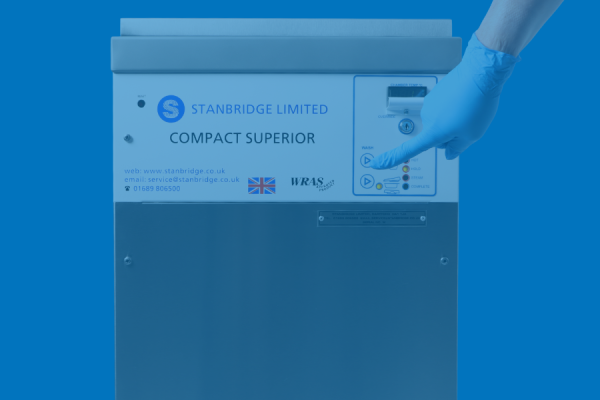
Correct equipment usage – Ensure staff are trained on using all equipment, such as bedpan washer disinfectors, correctly, i.e. loading of utensils, booking regular services and keeping deoscale up to date.
Thermal Disinfection Checks – Ensure staff understand why equipment must reach specific thermal disinfection temperatures (e.g., 80°C for at least one minute) to kill pathogens likely to cause C. diff or Norovirus.
Regular equipment tests – Train the team to run weekly equipment tests to ensure equipment is operating at peak performance, i.e. reaching those correct temperatures.
Airbourne Pathogens – Emphasise why hand washing bedpans in sinks is a high-risk task. The invisible spray created by manual scrubbing can travel and settle on staff and surfaces throughout the room. It is also important to ensure the sluice room remains well ventilated at all times.
Hand Hygiene – Focus on training staff on when to wash their hands and how to wash their hands for maximum infection control. Including after touching a resident’s surroundings, not just the resident themselves. Although simple, it is a highly important task to protect themselves, residents and patients. View our resources.
PPE Donning and Doffing – Most contamination happens during the removal of PPE. Ensure staff know how to take it off correctly and how to dispose of it, whilst preventing self-contamination.
Hands-Free Technology – Invest in and train staff on sensor-operated taps and foot-pedal bins. If they don’t have to touch a surface, it is less likely to be contaminated.
At Stanbridge, we can provide you and your staff with expert training in all aspects of infection control within the sluice room, to ensure you remain compliant. This also ensures infection control myths don’t creep in and affect best practices. Stanbridge can also provide loading charts and resources to put up in your sluice room as visual reminders.
Contact us today to find out more on 01689 806 500 or sales@stanbridge.co.uk.
If you would like to speak with a member of the team at Stanbridge, please feel free to contact us using the details below, or alternatively complete the contact form on this page and we will get back to you shortly.
Stanbridge Ltd
Unit 78, Powder Mill Lane
Questor
Dartford
Kent
DA1 1JA
Tel: 01689 806500